
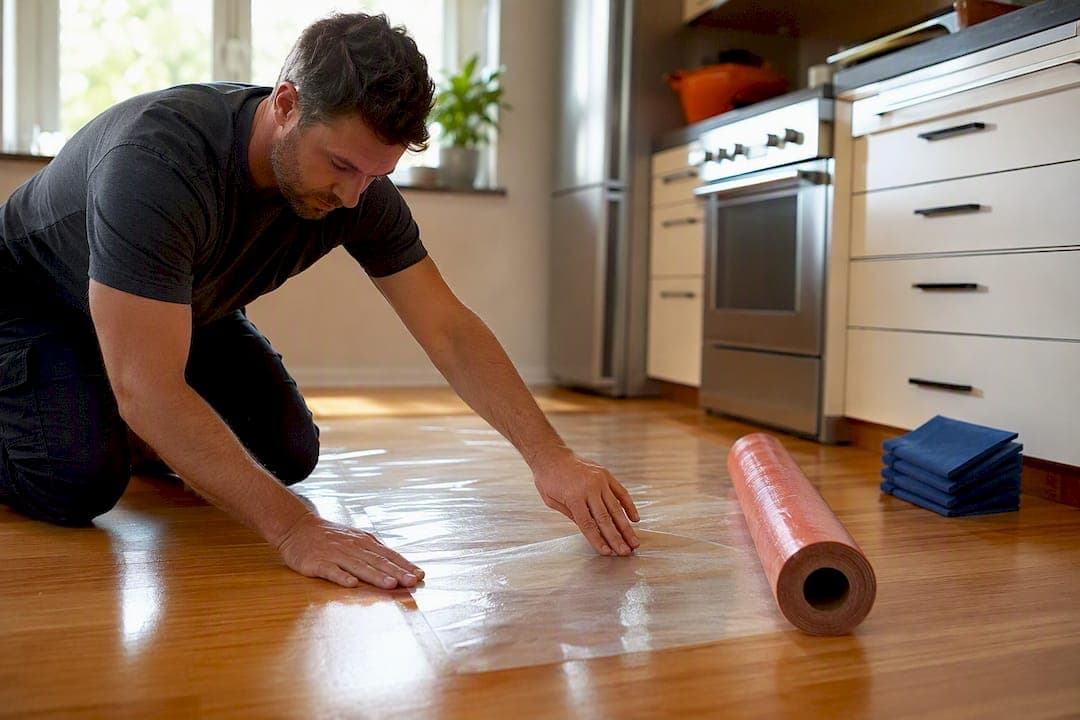
Pick the right protector for the surface you're covering: adhesive film for carpet, low-tack film or red rosin paper for hardwood, and neoprene runners or Ram Board for high-traffic paths. Cover entryways first, add scuff guards and sliders for appliances, and know that professional crews apply the same layered approach, using furniture padding and shrink-wrapping, on every job.
TL;DR:
- Using the wrong floor protection material, such as adhesive carpet film on hardwood, risks damaging the finish during removal.
- Reusing neoprene runners or foam protectors offers long-term savings for frequent movers, despite higher initial costs.
- Proper setup, including measuring, pre-cutting, and securing materials before moving day, prevents damage and saves time during the move.
- Layered protection with materials like Ram Board, scuff guards, and furniture sliders is essential for heavy appliances and high-traffic areas.
- Professional movers include comprehensive protection services, reducing the risk of accidental damage and ensuring proper application and removal.
Table of Contents
- Floor Protection Moving Materials: What to Buy or Rent
- How Do You Protect Different Floor Types During a Move?
- Moving Heavy Appliances Without Wrecking the Floor
- Move-Day Checklist: Setting Up Floor Protection Step by Step
- Common Mistakes and Pro Shortcuts
- How Professional Movers Protect Floors
- Installing and Removing Floor Protection Without Damage
- What Floor Protection Actually Costs
- Recycling and Disposing of Used Floor Protection
- An Editorial Take on What Actually Protects Your Floors
- Let Orangemover Handle the Floor Protection for You
- Sources
Floor Protection Moving Materials: What to Buy or Rent
Getting floor protection moving right starts with matching the product to the surface, not grabbing whatever's cheapest at the hardware store. Each material behaves differently once weight, foot traffic, and time come into play, so knowing the tradeoffs before moving day saves you from a ruined finish or a $200 mistake.
Adhesive carpet film is a heavy-duty plastic sheeting with a tacky backing designed to grip carpet fibers without shifting. It's sold in rolls, typically 24 to 36 inches wide and 200 to 500 feet long, and works best in hallways and stairwells where boxes get dragged repeatedly. The tack is aggressive enough to stay put under furniture dollies, but it's not reusable. Once it's peeled up, it's done. You'll find it at hardware stores, big-box retailers, and moving supply outlets.
Low-tack hard-surface film looks similar but uses a gentler adhesive built specifically for hardwood, laminate, and finished tile. This distinction matters more than most people realize. Self-adhesive floor films differ by substrate: carpet film uses a higher tack, while hard-surface film uses a lower tack to reduce finish damage. Using carpet-grade film on a hardwood floor risks pulling up the finish when you peel it away.
Red rosin paper (builder's paper) is a thin, reddish-brown paper sold in rolls, usually 36 inches wide by 100 to 200 feet long. It's the cheapest option on this list and works as a lightweight barrier against dust and light scuffing on hardwood or tile. It has no adhesive backing on its own, so it typically gets taped down at the edges or weighted with furniture. It won't survive a dolly wheel running over it twice, but for a quick, budget-friendly layer under boxes and light foot traffic, it earns its place.
Ram Board and similar heavy-duty board-style protectors are thick, fiberboard-like sheets, often 3 feet by 100 feet per roll, that seam together with tape to create a continuous, rigid walking surface. Contractors love it because it withstands repeated dolly and appliance traffic without tearing. It costs more than rosin paper, but for a whole-house move with multiple heavy loads crossing the same path, it holds up where paper won't.
Neoprene floor runners are reusable, non-adhesive mats made from slip-resistant rubber-like material. Neoprene runners are favored by professionals for quick installs and repeated use because they don't rely on tack to stay in place. Their weight and grippy backing hold them down. They come in standard widths (often 36 or 48 inches) and can be custom-cut to fit stair landings or narrow hallways. They cost more upfront than paper or film, but if you move often or manage multiple properties, the ability to reuse them for years changes the math.
Moving blankets and furniture pads aren't floor protection in the traditional sense, but they double as padding under furniture legs during a slide, and pros use them constantly for exactly that. Standard pads run around 72 by 80 inches and are typically quilted cotton or polyester with a moving-blanket weight.
Scuff guards are rigid plastic sheets, often 30 by 48 inches, built specifically for appliance moves. Scuff guards with pull straps let movers slide heavy appliances without direct floor contact, protecting both the flooring and the appliance's base.
Furniture sliders are small plastic or felt-bottomed discs that go under furniture legs, letting you glide a couch or dresser across the floor instead of dragging it. They're inexpensive, sold in packs of four or eight, and available at nearly any hardware store.
Here's a quick side-by-side for shopping purposes:
| Material | Best surface | Reusable? | Residue risk |
|---|---|---|---|
| Adhesive carpet film | Carpet | No | Low if removed within days |
| Low-tack hard-surface film | Hardwood, tile, laminate | No | Very low |
| Red rosin paper | Hardwood, tile | No | None (no adhesive) |
| Ram Board | Any hard surface, high traffic | Limited | None on floor |
| Neoprene runners | Any surface | Yes | None |
| Moving blankets/pads | Furniture protection, padding | Yes | None |
| Scuff guards | Under appliances | Yes | None |
| Furniture sliders | Any hard surface | Yes | None |
How Do You Protect Different Floor Types During a Move?
Every floor reacts to moving traffic differently, and the material that saves your hardwood could ruin your carpet. Here's how to match technique to surface.
-
Hardwood floors. Lay low-tack hard-surface film or red rosin paper along the main traffic path, then add a neoprene runner over the busiest sections like the front door and main hallway. Never use carpet-grade adhesive film on hardwood; the stronger tack can lift the finish when you peel it up. When removing any film, pull slowly at a low angle rather than yanking straight up, and if adhesive residue remains, a manufacturer-approved adhesive remover works better than scraping.
-
Tile and vinyl floors. Self-adhesive runners work well here, but keep the adhesive strictly on the tile surface, never on grout lines, where the porous material can absorb residue permanently. When seaming two runner sections together, tape the seam on top of the runner itself rather than taping directly to the floor. This is a small habit, but it's the difference between a clean pickup and a sticky mess.
-
Carpet. Choose between carpet film (higher tack, better grip, but single-use) and reusable carpet masks depending on how many rooms you're covering. For high-traffic pathways, like the route from the front door to the moving truck, padded floor protection rolls with tacky backing provide impact protection and stay repositionable, which helps if you need to adjust coverage mid-move. Layer a runner over film in doorways where furniture legs and dolly wheels concentrate the most force.
-
Stairs. Stair runners need to stay flat against each tread without curling at the edges, since a lifted corner becomes a fall risk the moment someone's carrying a box downstairs. Cut runner material to the width of each tread individually rather than trying to force one long piece to conform to the angles. Professionals often custom-cut neoprene and seam pieces with tape kept off the finished surface, which prevents adhesive contact with wood or painted risers. Leave the handrail completely clear. Wrapping it adds bulk that makes the stairs harder to navigate safely, which defeats the purpose of protecting the space in the first place.
Moving Heavy Appliances Without Wrecking the Floor
Refrigerators, washers, and stacked dressers cause more floor damage than anything else you'll move, mostly because their weight concentrates on four small contact points. The fix is keeping those contact points off the floor entirely.
- Slide scuff guards under each appliance foot before you attempt to move it. The rigid plastic distributes weight and lets the appliance glide instead of gouging.
- Use appliance skates (small wheeled platforms) or pull straps for refrigerators and washers. A pull strap looped around the appliance gives one person enough leverage to guide it without brute force.
- Furniture sliders handle sofas, dressers, and other heavy but non-appliance items. Tilt the piece slightly, slip a slider under each leg, and lower it back down.
- Disassemble what you can. Removing legs, doors, or shelves reduces footprint and weight, which means fewer trips and less floor contact overall.
- Combine tools for maximum protection: a slider under the leg, sitting on a padded runner, with a scuff guard bridging the doorway threshold.
Thresholds and narrow halls are where things go wrong fastest, since there's no room to correct course if a dolly wheel catches an edge. Measure appliance width against doorway width before move day, not during. Elevators need a padded liner if your building has one available, and stair landings deserve their own dedicated runner section rather than expecting the hallway runner to stretch that far.
Pro Tip: Measure your appliance's actual base footprint, not the whole unit's width, before buying scuff guards. A 30 by 48 inch guard fits most standard refrigerators, but oversized French-door models sometimes need two overlapped guards to fully cover the base.
Move-Day Checklist: Setting Up Floor Protection Step by Step
Floor protection during a move works best when it's set up before the truck arrives, not improvised while your crew is standing in the doorway holding a couch.
- Measure every path the movers will walk, from the truck to each room, including turns and doorway widths. Write down the total linear footage so you know how much runner or film to buy.
- Order materials with a buffer. A rough rule of thumb: buy 15% more linear footage than your measurements suggest, since seams, corners, and trimming eat into your supply faster than expected.
- Pre-cut runners and paper the night before. Cutting stair-tread sections and doorway pieces in advance saves real time on move day, when every minute matters.
- Remove rugs and obstructions from the path entirely. A loose area rug under a runner is a hidden trip hazard waiting to happen.
- Protect the entryway first. Transition zones like entryways, hallways, and stairs collect the most debris and see the heaviest foot traffic, so this is the highest-priority section to cover before anything else.
- Work outward: entryway, then hallways, then stairs, then individual rooms. This sequence mirrors the actual path of traffic, so you're never protecting a room after boxes have already crossed it.
- Secure every edge with tape placed on top of the protector, never stuck directly to bare floor unless the product is designed for that.
- Re-check coverage after each major load. Runners shift, tape lifts, and corners curl under repeated dolly traffic, so a five-minute walk-through between trips catches problems before they become damage.
- Assign roles if you have helpers: one person manages the dolly and appliance moves, another watches the floor protection and re-secures loose sections.
A typical three-bedroom home takes some time to fully protect before the truck backs in, and that time investment routinely saves hours of cleanup or repair later.
Common Mistakes and Pro Shortcuts
Most floor damage during a move traces back to a small number of repeatable errors, and nearly all of them are avoidable with a five-minute fix.
- Using carpet-grade adhesive on hardwood, which risks pulling up the finish on removal.
- Dragging heavy furniture instead of using sliders, even for "just a few feet."
- Leaving loose tape edges or uneven cardboard sections, which create real trip hazards mid-move.
- Taping protective film directly to a finished floor's edge instead of taping seams on top of the material.
- Skipping the entryway mat, which means every single item entering the house crosses bare flooring on the first and last trip.
Pro Tip: Keep a small supply kit on hand throughout the day: a utility knife for trimming runners, low-tack painter's tape for securing edges without damage, a manufacturer-approved adhesive remover, and two or three extra feet of runner material for unexpected gaps.
Cutting neoprene to the exact width of a landing or hallway, rather than letting it overhang, keeps edges from curling underfoot. Shoe covers for anyone helping with the move add one more layer of dirt control, especially useful if the move happens during rainy months.
How Professional Movers Protect Floors
Hiring a professional crew doesn't just outsource the labor. It brings a layered protection system that most DIY movers don't have the equipment or experience to replicate exactly. Orangemover's crews apply floor, wall, and doorway protection as a standard part of every job, not an upsell added after something gets scratched.
That system typically includes runners and film matched to the specific floors in your home, plus furniture padding, shrink-wrapping, and quilt-wrapping for the pieces themselves. Quilt-wrapping in particular protects wood furniture edges and corners from denting walls or door frames during tight turns, something a rolled-up moving blanket and a few pieces of tape can't fully replicate.
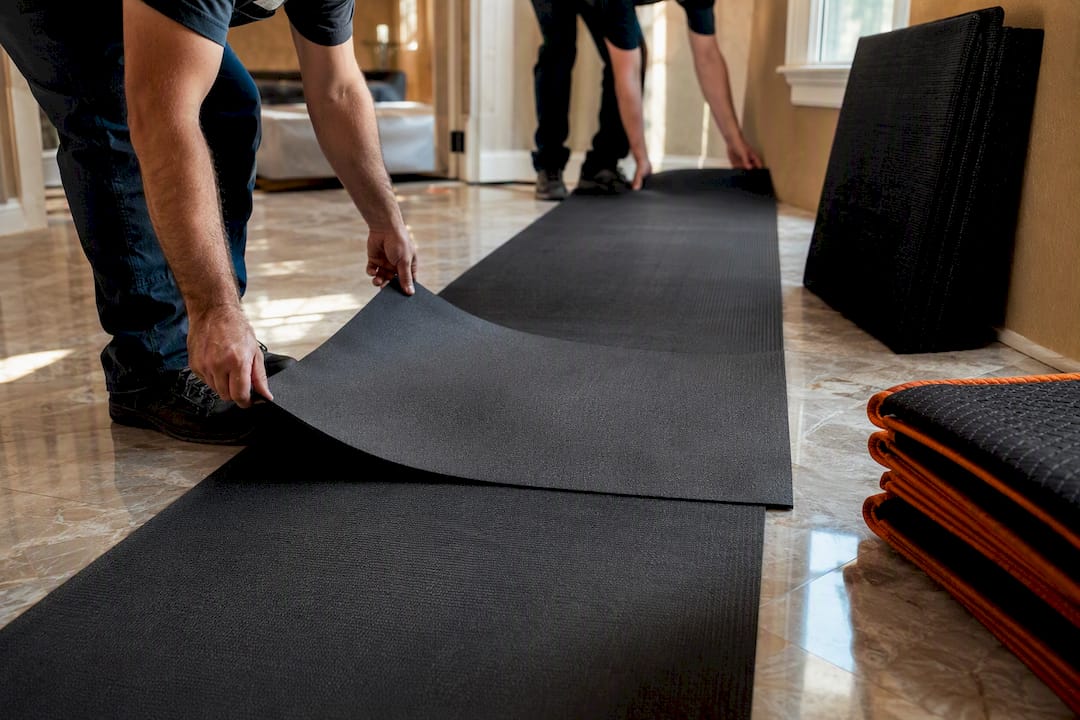
Hiring a pro typically covers three things a DIY setup often misses: the materials themselves (so you're not making a last-minute hardware run), trained labor that knows how to seam runners and secure stair coverage correctly, and insurance that protects you if something still goes wrong despite every precaution. That last piece matters more than people expect. Even careful DIY moves occasionally result in a scratched floor or a dented door frame, and without insurance, that repair cost lands entirely on you.
If your move involves multiple flights of stairs, an elevator building, or heavy furniture that needs disassembly, that's usually the point where hiring a professional crew pays for itself in avoided damage and saved time.
Installing and Removing Floor Protection Without Damage
Installation matters as much as material choice. Lay film or paper in the direction of foot traffic, overlapping seams by two to three inches so dolly wheels never catch a raw edge. Tape seams on top of the protector, never directly onto the floor, since that's where most residue problems start.
For adhesive film, press it down evenly from the center outward to avoid trapping air bubbles that later become trip points. Runners and Ram Board rely on weight and friction rather than adhesive, so make sure edges sit flat against baseboards or thresholds instead of curling upward.
Removal deserves the same care as installation. Pull adhesive film slowly at a low angle, roughly 45 degrees, rather than straight up, which reduces the chance of lifting a finish or leaving residue behind. Self-adhesive coverings are designed to stay in place for extended periods without shifting, but that same durable tack means rushed removal is the most common cause of finish damage.
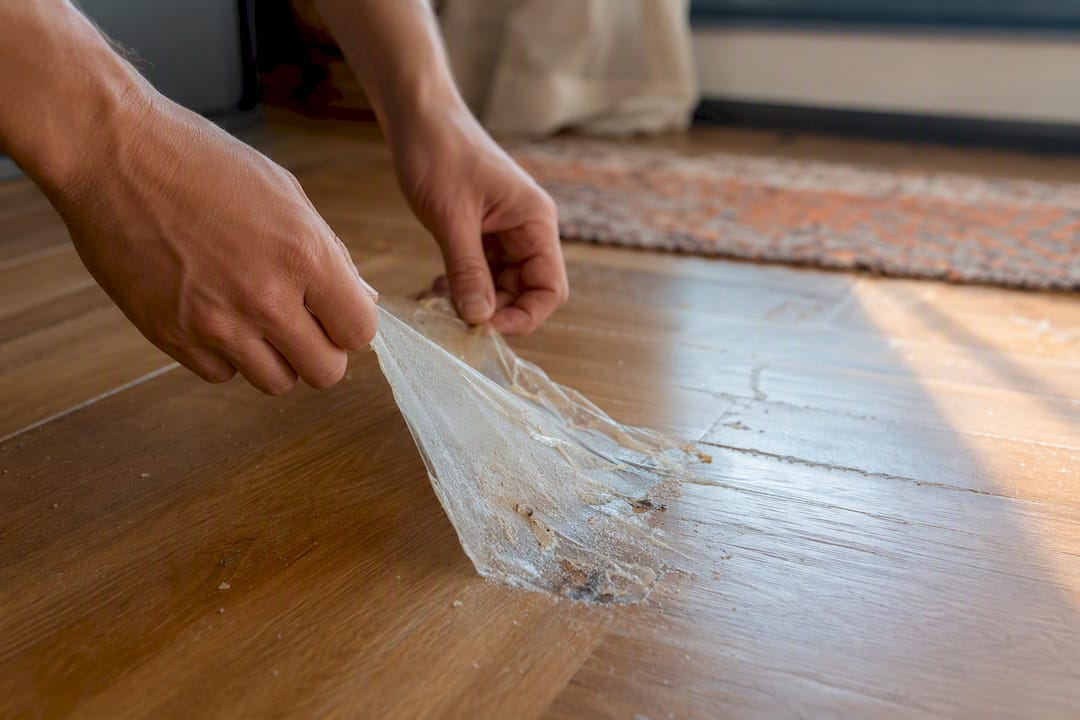
If residue remains after peeling up film, test a manufacturer-approved adhesive remover on a small, hidden section first. Some hardwood finishes react poorly to solvents, so a spot test beats a full-floor mistake. Rosin paper and Ram Board rarely leave residue since they typically rely on tape only at the perimeter, making them the lowest-risk option for finished floors you're worried about.
What Floor Protection Actually Costs
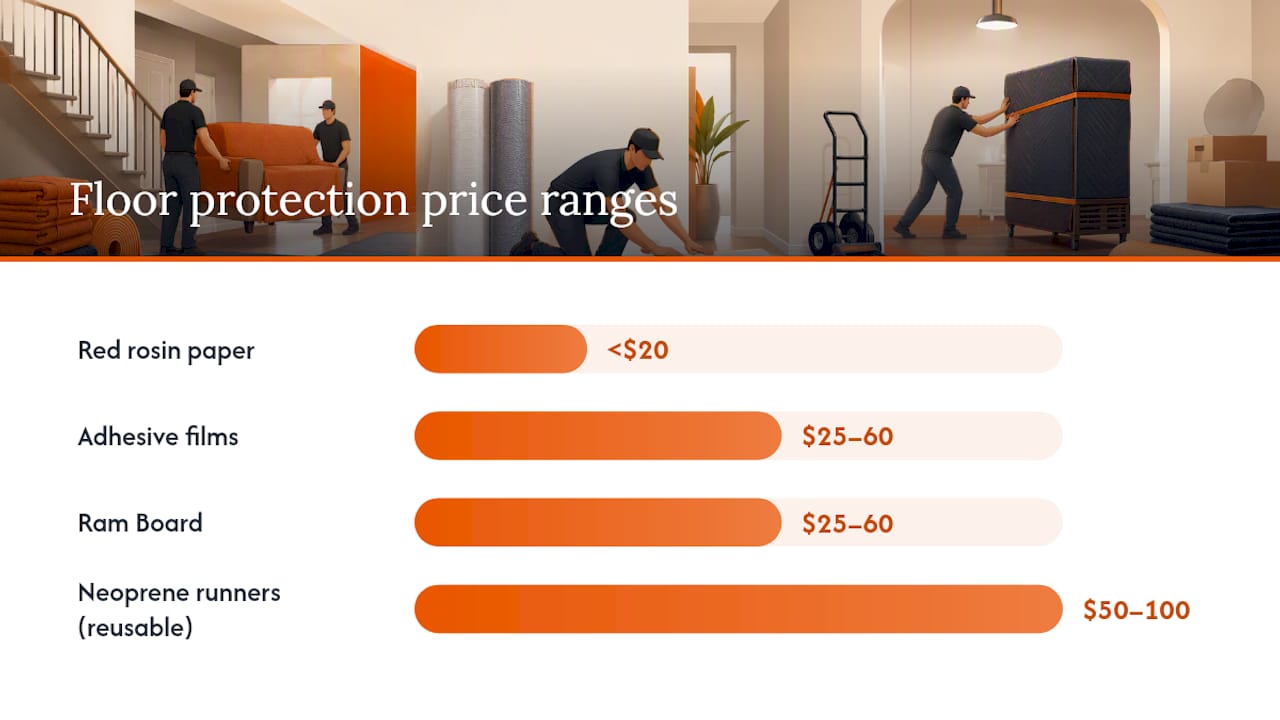
Budget for floor protection during a move usually falls between $30 and $150 for a full single-family home, depending on how many rooms and how much hallway and stair coverage you need. Red rosin paper sits at the low end, often under $20 per roll, making it the most budget-friendly choice for light-traffic rooms and secondary paths.
Neoprene runners cost more upfront, sometimes $50 to $100 for a quality roll, but their reusability changes the long-term math if you move periodically or manage rental properties. Ram Board and adhesive films land in the middle, typically $25 to $60 per roll depending on width and length.
The most cost-effective approach for most single moves is a mix: rosin paper or budget film for secondary rooms, one higher-quality runner or Ram Board section for the main traffic path, and a handful of scuff guards for appliances. That combination covers the highest-risk areas without overspending on rooms that see minimal foot traffic.
Skipping protection entirely to save money is the false economy here. A single gouged hardwood plank can cost more to repair than an entire roll's worth of protective film, and rental security deposits often hinge on floor condition at move-out.
Recycling and Disposing of Used Floor Protection
Most floor protection materials can be handled responsibly once the move wraps up, though the disposal method depends on what you used. Red rosin paper and plain builder's paper are typically recyclable as mixed paper, as long as they're not saturated with adhesive residue or heavily soiled.
Adhesive films and Ram Board usually aren't recyclable through standard curbside programs because of the plastic coating or adhesive backing. Check whether your local waste facility accepts construction debris separately. Some municipal programs do, even when they exclude these materials from regular recycling.
Neoprene runners and moving blankets are the most sustainable choice in the long run simply because they're reusable across multiple moves. If you're done with them permanently, some moving supply companies and secondhand marketplaces accept used runners in good condition rather than sending them to a landfill.
Scuff guards and furniture sliders, being small and durable, rarely need disposal at all. Store them for the next move or pass them along to a friend who's relocating. If a move generates leftover debris beyond the protection materials themselves, a dedicated debris removal service can clear it out efficiently rather than leaving it for a separate trip to the dump.
An Editorial Take on What Actually Protects Your Floors
Most floor-protection advice online treats every surface the same, and that's where it falls apart. The real skill isn't knowing that runners exist. It's knowing which adhesive won't strip your hardwood finish and which material actually survives a refrigerator crossing it twice.
Conventional wisdom oversells cardboard and undersells entryway prioritization. Cardboard feels free and available, but it shifts, tears, and hides trip hazards under a thin layer of false confidence. Meanwhile, the single highest-leverage move, protecting the entryway and main hallway before anything else, gets buried as a minor checklist item instead of the priority it should be.
If you take one thing from this, prioritize the transition zones first, buy the correct film for your specific surface rather than whatever's cheapest, and recognize that the line between a smooth DIY move and a damaged floor usually comes down to five minutes of setup most people skip.
— Milo
Let Orangemover Handle the Floor Protection for You
Orangemover is the alternative to piecing together rolls, tape, and guesswork on move day. Every job includes professional-grade floor, wall, and doorway protection along with furniture padding and shrink-wrapping, so you're not standing in a hardware store aisle comparing film types the morning of your move.

That means no last-minute trips for rosin paper, no guessing whether your adhesive film will strip your hardwood finish, and no worrying about who's re-checking the runners after the third heavy load. Orangemover's crews arrive with the right materials matched to your specific floors and handle the setup, application, and removal as part of the job, with licensed and insured coverage backing every step.
If you're planning a move in South Florida, get a free quote from Orange Movers and ask about full floor protection coverage for your home or office. Clients in the area can also check availability through the Miami movers page or the Fort Lauderdale service area to see what's included before booking.
Sources
- Top (9) Essential Moving Floor Protection Tips - Neighbor Blog
- Temporary Floor Protector | Non-Slip Padded Surface Protection - TapeManBlue
- Scuff Guard Floor Protector - 30" x 48" w/ Pull Strap - US Cargo Control
- PIG® Floor Protection Self-Adhesive Covering - NewPig