

Use packing paper as your default for most boxes: it protects surfaces, saves space, and stacks efficiently. Reach for bubble wrap when an item is prone to breaking on impact or getting dropped, and combine the two for anything genuinely fragile: paper against the surface, bubble wrap wrapped over it. The one hard exception is electronics, which need anti-static bubble wrap, not the standard kind.
TL;DR:
- Combining packing paper and bubble wrap provides optimal protection by addressing scratches and impact absorption, especially for fragile or heavy items.
- Bubble wrap's impact resistance is valuable for heavy, protruding, or oddly shaped objects, while packing paper keeps boxes compact and protects delicate surfaces.
- Eco-friendly alternatives like honeycomb kraft paper and molded pulp offer recyclable solutions that perform similarly to bubble wrap for many packing needs.
- Proper packing sequence involves lining boxes, wrapping items in paper, adding bubble wrap for impact, filling voids, and securing everything to prevent shifting during transit.
- Professional packing services prioritize layering and sequence over material alone, reducing breakage risks for long-distance moves.
Table of Contents
- Packing Paper vs. Bubble Wrap: Comparing the Trade-Offs
- What to Use for Dishes, Electronics, Art, and Bulky Items
- How to Pack a Box the Right Way: Paper and Bubble Wrap Combined
- Eco-Friendly Alternatives Worth Knowing About
- Buying and Storing Packing Supplies Without Overspending
- How Orange Movers Handles Fragile Items on Real Jobs
- Where Most Packing Advice Gets It Wrong
- Ready to Skip the Guesswork? Let Professionals Pack the Fragile Stuff
- Sources
Packing Paper vs. Bubble Wrap: Comparing the Trade-Offs
Choosing between these two materials comes down to what you're protecting against: scratches or shattering. Packing paper wins on surface protection. It won't ghost, smudge, or leave residue on glazed dishes, painted furniture, or framed photos the way plain bubble wrap sometimes can when pressed against a delicate finish for weeks in a moving truck. Bubble wrap wins on shock absorption. Its air-filled pockets are built to dissipate force, which is exactly what you need when a box gets dropped on a loading dock or jostled in transit.
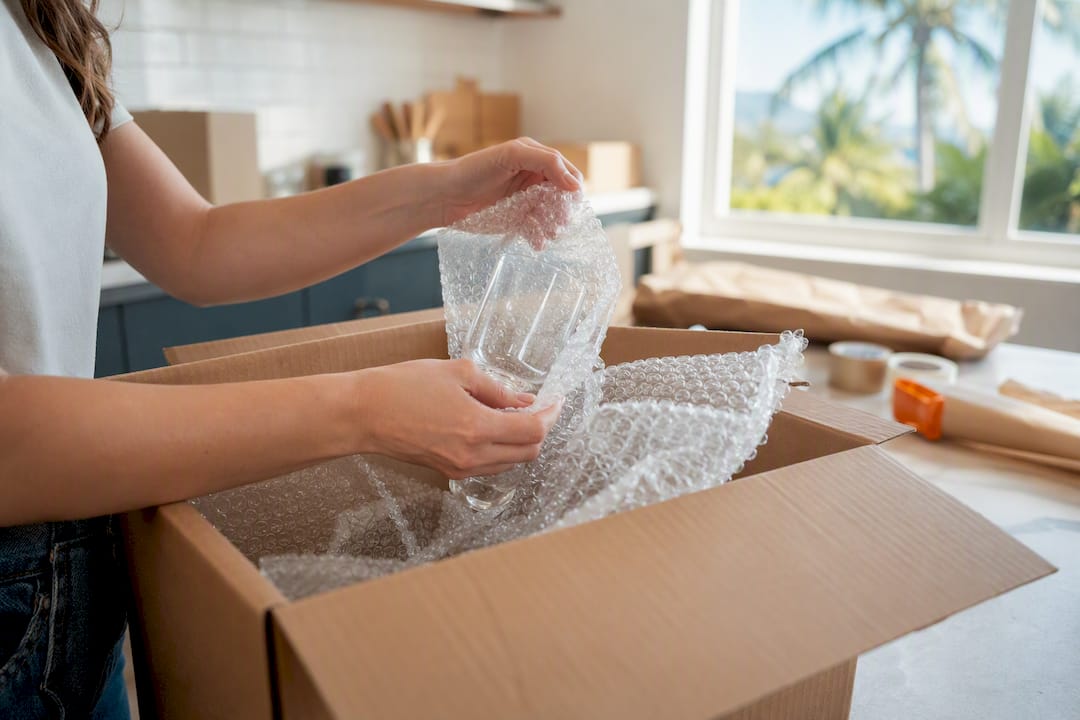
Bulk matters more than people expect. Bubble wrap adds loft, and that loft raises the dimensional weight carriers use to calculate shipping cost. Packing paper keeps your box dimensions tighter, which can mean a genuinely cheaper shipment on the same items.
Here's how the two stack up at a glance:
- Protection level: Bubble wrap generally provides better impact and drop protection; paper excels at preventing scratches and abrasion.
- Surface safety: Packing paper is typically the preferred direct contact layer for finished or delicate surfaces.
- Bulk and shipping: Paper helps keep boxes compact; bubble wrap often adds bulk that may increase box size and shipping costs.
- Cost and reuse: Paper tends to be less expensive per square foot and can be flattened easily for storage.
- Recyclability: Packing paper is accepted in most curbside recycling programs; plastic bubble wrap often requires special store drop-off recycling.
Neither material is objectively "better." They solve different problems, and the smartest packers use both.
What to Use for Dishes, Electronics, Art, and Bulky Items
The right material changes item by item, and getting this wrong is how most breakage happens during a move.
- Dishes and glassware. Wrap each piece in packing paper first. That's your scratch barrier and your primary surface layer. If you're shipping long distance or expect rough handling (movers you don't know, a freight carrier, multiple transfers), add a layer of bubble wrap over the paper for shock absorption.
- Framed art and mirrors. Cover the glass or frame face with packing paper, then reinforce the corners specifically. Corners are where frames crack. Corner protectors or a few extra bubble wrap layers at each edge solve this cheaply.
- Electronics. Use anti-static bubble wrap, never the standard plastic kind, since regular bubble wrap can build up static charge that damages sensitive circuitry. Also avoid pressing any plastic wrap directly against a screen or a freshly painted surface. Put a sheet of packing paper between the item and the bubble wrap as a buffer.
- Large or heavy items. Bubble wrap earns its keep here because it can bear load without collapsing. Packing paper alone tends to tear or compress flat under real weight, which defeats the purpose.
- Odd shapes and stacked items. Packing paper conforms around irregular shapes and lets you stack boxes more predictably. Bubble wrap is better saved for protruding edges, handles, or corners that would otherwise poke through.
Pro Tip: Skip the newspaper, even if it's free and sitting in your recycling bin. The ink smudges onto dishes and glassware, and newsprint tears far more easily under stress than actual packing paper, which usually means more cleanup than the money you saved.
How to Pack a Box the Right Way: Paper and Bubble Wrap Combined
A good packing sequence isn't complicated, but skipping a step is exactly how items shift and break in transit.
- Line the box bottom. Crumple packing paper and lay two to three inches across the bottom before anything goes in.
- Wrap each item in paper. This is your surface layer for every fragile piece, no exceptions.
- Add bubble wrap where impact risk is real. Heavy dishes, electronics, or anything shipping long distance gets a second wrap.
- Position items so heavier pieces sit on the bottom and lighter ones stack above, never the reverse.
- Fill every void. Crumpled paper locks into a firm, compression-resistant fill for gaps, while loose bubble wrap or air pillows work better when you need the item to float and absorb sudden jolts rather than sit rigid.
- Top off, seal, and label. Add a final cushioning layer, tape the box shut, and mark it "Fragile" with the room it belongs to.
Boxes that rattle when you shake them gently are boxes that will arrive damaged. If you hear movement, open it back up and add more fill before it goes on the truck.
Eco-Friendly Alternatives Worth Knowing About
If plastic waste bothers you, you have real options beyond just choosing paper over bubble wrap outright.
- Honeycomb kraft paper expands into a 3D cushioned structure when stretched, and it performs comparably to bubble wrap in many packing scenarios while being fully recyclable and far more compact in storage.
- Molded pulp inserts offer structured, repeatable protection and are commonly used in retail and repeat-shipping settings where the upfront tooling cost pays off over many shipments.
- Corrugated inserts provide rigid separation for stacked or multi-item boxes and recycle just as easily as the box itself.
Plastic bubble wrap typically needs a store drop-off program rather than curbside pickup, so rinse off tape residue and flatten it before recycling if your area accepts it. For household moves with heavy items, high drop risk, or long carrier transit, paper-based alternatives alone usually aren't enough. That's still bubble wrap's territory.
Buying and Storing Packing Supplies Without Overspending
Small bubbles suit delicate, lightweight items and general wrapping; large bubbles are for heavier or high-impact pieces that need real cushioning. Buying the wrong size either wastes protection or wastes money.
- Grab rolls if you pack often or are prepping for a full household move.
- Buy sheets for a one-off shipment or two.
- Consider honeycomb paper if storage space is tight. It flattens down far more compactly than a bubble wrap roll.
- Watch your layers when shipping. Extra bubble wrap loft can quietly push a package into a higher dimensional-weight bracket and raise your shipping cost.
Leftover supplies store best flat, in a dry space, away from anything that could puncture the bubble wrap sheets over time.
How Orange Movers Handles Fragile Items on Real Jobs
For a long-distance move, our crews wrap each dish in packing paper first, then add a bubble wrap layer before boxing, because extended time on a truck means more vibration and more handoffs. For a local move across town, paper alone is often enough since the item spends less time in transit and moves through fewer hands.
Licensed and insured crews, fragile-only custom packing, and specialty handling for pianos and fine art are what separate a professional pack job from a rushed DIY one. The difference shows up when the box gets opened at the other end.
Orange Movers also offers furniture padding and wrapping for large pieces that need more than paper or bubble wrap alone can provide.
Where Most Packing Advice Gets It Wrong
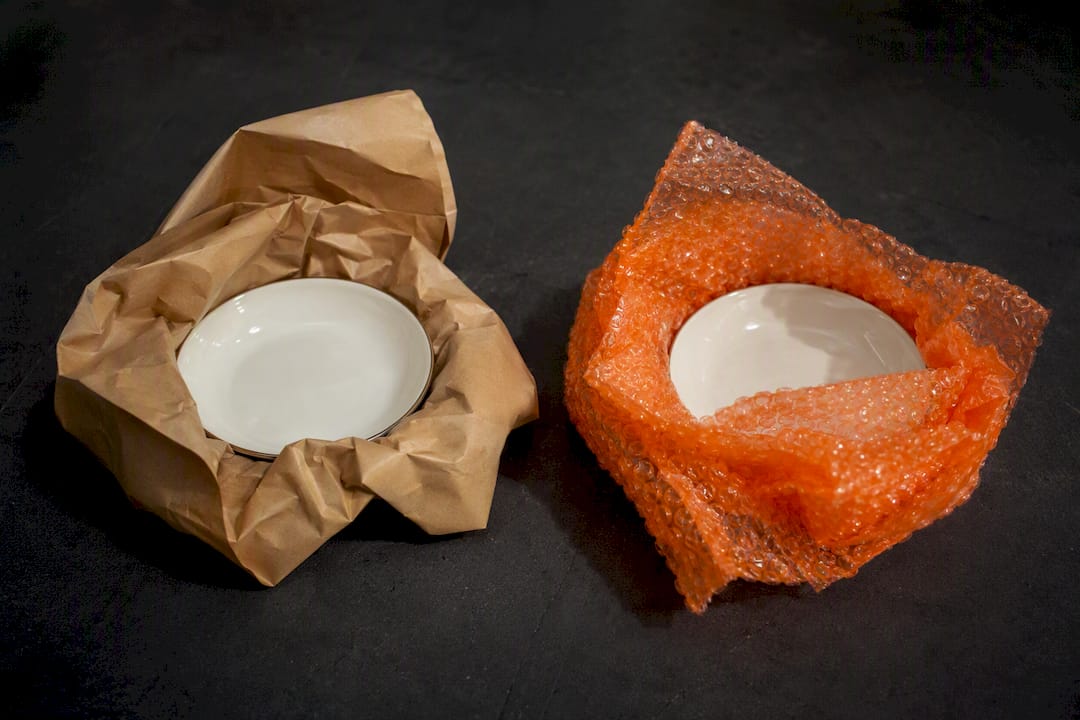
Most guides treat this as an either/or decision, and that's the wrong frame. The research consistently points to layering, not picking a winner. Packing paper handles the job bubble wrap is bad at (surface protection, tight box dimensions), and bubble wrap handles the job paper is bad at (shock absorption under real impact). Treating them as competitors misses the actual lesson.
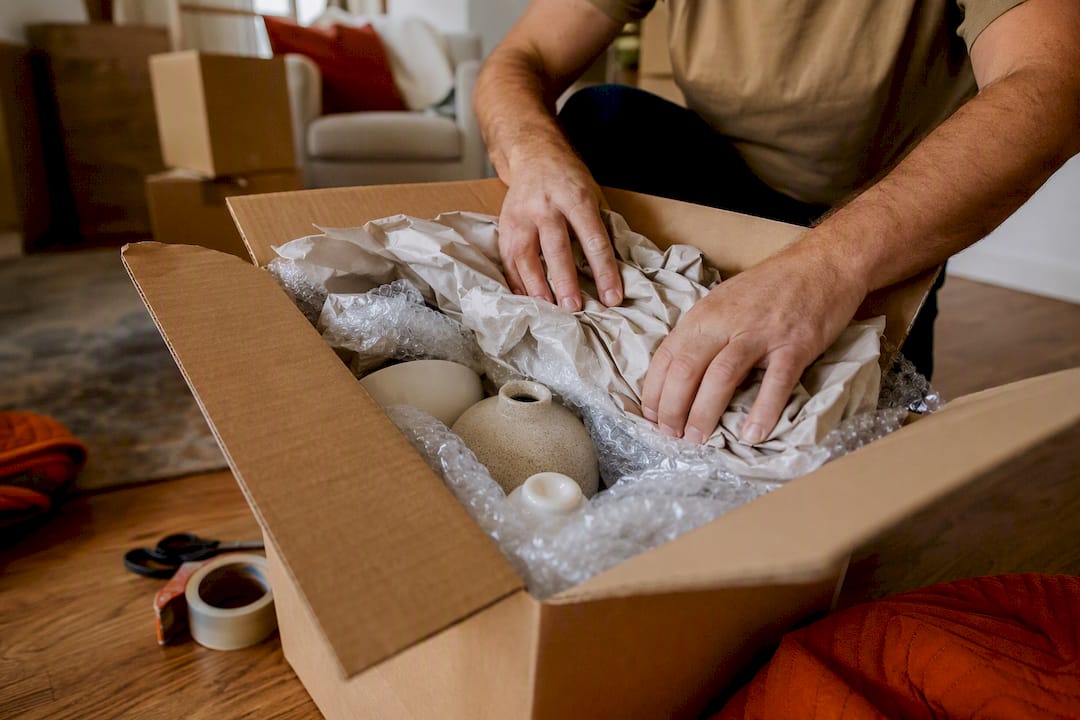
The bigger gap in most advice is honeycomb kraft paper. Plenty of articles mention it exists. Almost none explain that it expands into a cushioned structure on its own, stores flat until you need it, and recycles without a special drop-off trip. For anyone packing regularly, whether that's a small business shipping product or a family doing a full household move, it deserves a spot in the supply closet next to the standard rolls, not a footnote.
If there's one priority to take from all of this, it's sequence over material. Get the paper-then-bubble order right, fill every void so nothing shifts, and the material choice matters far less than people assume.
— Milo
Ready to Skip the Guesswork? Let Professionals Pack the Fragile Stuff
Getting the sequence right on one box is easy. Getting it right on sixty boxes, with a move date bearing down on you, is where things go wrong. Orange Movers offers fragile-only custom packing for households that just want the breakables handled correctly, plus full-service packing and unpacking for anyone who wants the whole move off their plate.

Every job comes with transparent pricing and no hidden fees, backed by a fully licensed and insured crew that has handled everything from dish sets to grand pianos across South Florida since 2010. If you're planning a move in the area, check availability on our Miami movers page or request a quote through our services page to get a real number before moving day sneaks up on you.
Sources
- Packaging cushioning materials: complete comparison guide (2026) — Benz Packaging
- This Plastic-Free Packing Paper Is Better Than Bubble Wrap | The Strategist
- Packing Materials Comparison: Choose the Right Option — Custom Logo Thing