
Storage-in-transit (SIT) is temporary, mover-arranged warehousing for your household goods between pickup and final delivery, used when you can't accept your shipment right away. It's common on long-distance moves when your new home isn't ready, during renovations, or when closing dates don't line up. Your mover's valuation coverage typically stays active while your belongings sit in the warehouse, though the exact terms depend on your bill of lading.
TL;DR:
- Most SIT costs include handling fees, storage rates, and redelivery charges, with climate control adding extra fees and partial deliveries incurring additional handling costs.
- Storage limits typically range from 60 to 90 days before converting to permanent storage, requiring written confirmation from your mover to avoid unexpected rate changes.
- SIT is best suited for long-distance moves with uncertain delivery dates, whereas self-storage and portable containers offer more control but usually come at higher costs or with additional responsibilities.
- Prohibited items like hazardous materials, perishables, and firearms are common restrictions, and climate-sensitive belongings such as antiques and electronics benefit from climate-controlled storage.
- To prevent issues, secure a written SIT tariff with clear conversion deadlines, schedule redelivery in advance, and thoroughly document your belongings before pickup.
Table of Contents
- What Is Storage in Transit, Exactly?
- How SIT Works: From Pickup to Redelivery
- What Does SIT Actually Cost?
- SIT vs. Portable Containers vs. Self-Storage
- Items You Can't Store and Why Climate Control Matters
- Your SIT Planning Checklist
- Getting Your Items Ready for Storage
- Orange Movers' Take on Storage in Transit in South Florida
- How Orange Movers Handles Your Storage Needs
- Sources
- FAQ
What Is Storage in Transit, Exactly?
Storage-in-transit isn't a side service you shop for separately. It's a provision built into your existing moving contract, arranged under the same bill of lading you signed for the move itself. Your mover picks up your belongings, transports them, and instead of delivering to your new address, holds them in a secured warehouse until you're ready.
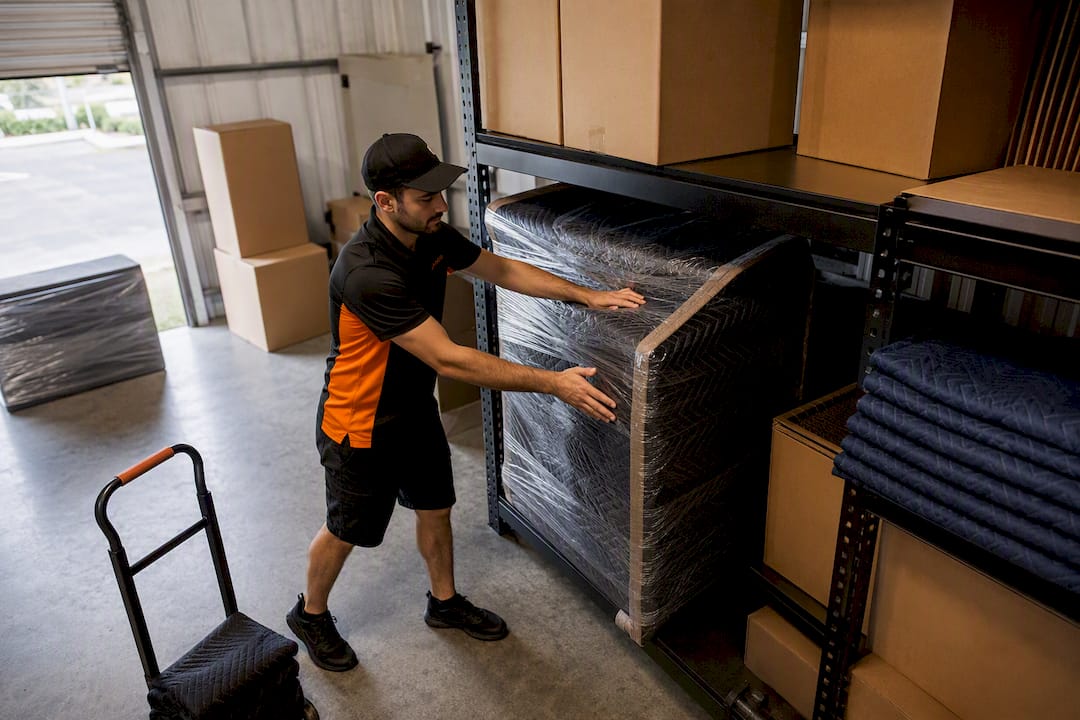
The valuation coverage you selected for the move usually carries over into SIT, though how much protection you have depends on which option you chose. Released value coverage caps reimbursement at a set amount per pound, which often falls far short of actual replacement cost. Full value protection covers repair, replacement, or cash settlement at current market value. Check your bill of lading before pickup, not after something goes missing.
SIT is typically offered by:
- Interstate carriers regulated under federal household goods rules
- Full-service moving companies with their own warehouse space or partnerships with secure facilities
- Movers handling long-distance relocations where delivery timing is uncertain
How SIT Works: From Pickup to Redelivery
The process follows a predictable sequence, though timing varies by carrier and distance.
- Pickup and inventory. Your crew loads and inventories your belongings just as they would for direct delivery.
- Transport to the warehouse. Goods travel to a secured facility, sometimes on the same truck used for the move, sometimes transferred to a dedicated storage vehicle.
- Warehouse handling. Items get unloaded, checked against inventory, and vaulted or palletized for storage. This handling step is billed separately from the storage period itself.
- Storage period. Your goods sit in the warehouse until you request delivery, within the limits your tariff allows.
- Redelivery scheduling. You give notice, and the mover schedules final delivery, treating it much like a local move on the receiving end.
Most carriers ask for anywhere from a few days to two weeks' notice before redelivery, depending on scheduling and how far the warehouse sits from your new address. If storage runs past the tariff-set deadline, commonly 60 to 90 days, the shipment converts to permanent storage. That conversion changes your rate structure and, in some cases, your liability terms, which is why carriers are required to notify you before it happens.
Pro Tip: Ask your mover for the exact conversion date in writing before you sign anything. A verbal "around 90 days" isn't the same as a hard deadline printed on your paperwork.
What Does SIT Actually Cost?
SIT pricing breaks down into three separate charges, and each one shows up whether your shipment stays in the warehouse for five days or fifty.
- Warehouse handling (in and out): a flat or per-hundredweight fee for loading into and out of storage
- Storage rate: billed daily or monthly, often calculated per weight or per vault used
- Redelivery: priced similarly to a local move, covering the trip from warehouse to your new address
Climate control usually adds a premium, and some carriers charge minimums even for partial months. Partial deliveries, where you request only some of your items early, can also trigger an extra handling fee.
Short-term storage arrangements typically run three months or less, and pricing across the storage industry varies widely by unit size, climate control, and local market conditions. Before you sign your estimate, require the mover to list SIT charges as their own line items, referencing the specific tariff section that governs them. A vague "storage fees may apply" clause is where surprise invoices come from.
SIT vs. Portable Containers vs. Self-Storage
Each option trades convenience for control in a different way.
- Storage-in-transit keeps your mover in custody of your goods the entire time, and your valuation coverage continues without a gap. You get low rehandling on interstate moves, but you can't just drop by and grab something.
- Portable containers sit on your property, so you load them yourself and access them whenever you want. That flexibility helps with staging a home for sale or working around a renovation, but monthly fees run higher than SIT in many markets, and placing a container on your street sometimes requires a city permit or HOA approval.
- Self-storage is usually the most accessible and often the most affordable option, but you're responsible for getting items to and from the facility, and insurance is typically a separate policy you buy on your own.
The right call depends on whether you value hands-off custody, on-site access, or the lowest sticker price.
Items You Can't Store and Why Climate Control Matters
Warehouses that handle SIT enforce prohibited-item lists for safety and liability reasons. Commonly banned items include:
- Hazardous materials like propane, gasoline, and paint thinner
- Perishable food and live plants
- Certain lithium batteries and combustible liquids
- Firearms and ammunition in most facilities
Climate control matters more than people expect for antiques, solid wood furniture, electronics, and artwork, all of which react badly to South Florida's humidity swings over weeks in storage. Document high-value pieces with photos and receipts before pickup, and ask your mover whether climate-controlled sections cost extra.
Your SIT Planning Checklist
A little paperwork upfront prevents most of the headaches people run into with SIT.
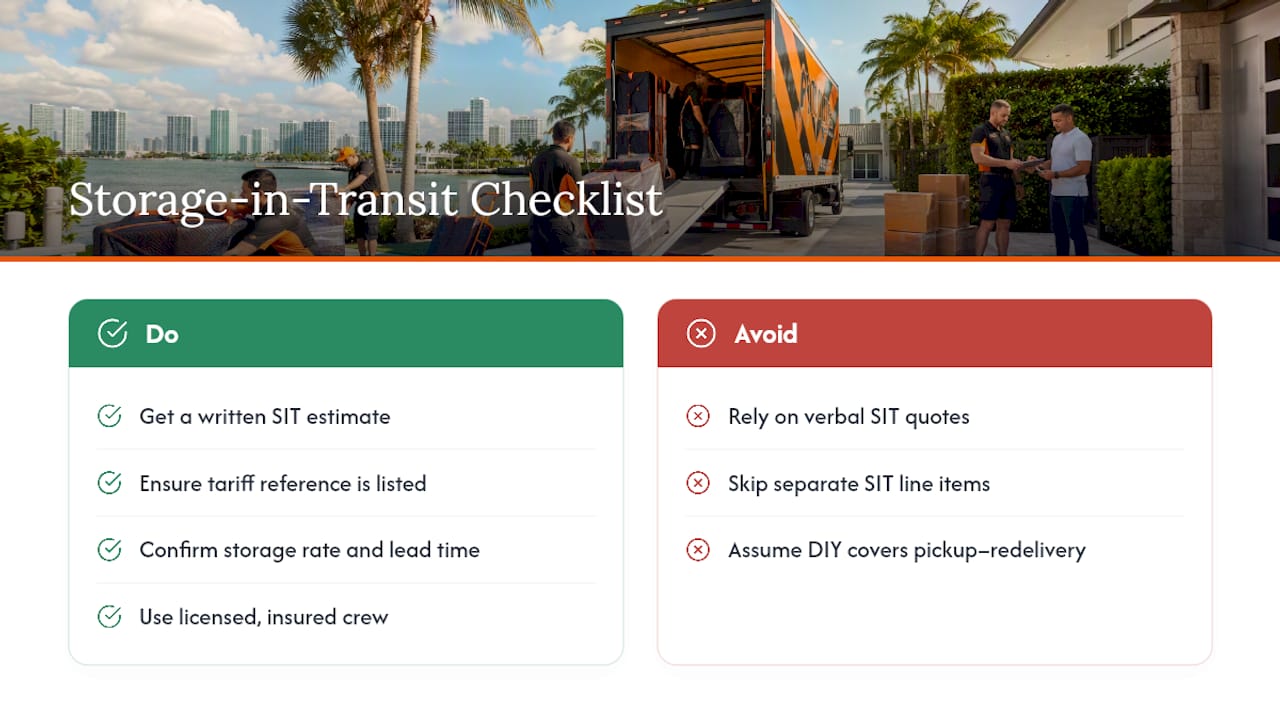
- Get the SIT tariff terms in writing, including the conversion deadline and how the carrier will notify you as it approaches.
- Confirm the notification method (email, phone, certified mail) so you don't miss a deadline buried in a portal you never check.
- Schedule redelivery with the lead time your carrier requires, and pack a separate bag of essentials that never goes into storage.
- Record the condition and value of your belongings, photograph anything expensive, and keep copies of your bill of lading and inventory sheet somewhere other than the moving truck.
Pro Tip: Keep digital copies of your inventory and bill of lading in your email or cloud storage. If your printed copy travels with the shipment, you'll want a backup on your phone.
Getting Your Items Ready for Storage
How you pack before pickup determines how smoothly SIT goes, both for protecting your belongings and for filing a claim if something goes wrong.
- Walk through each room and build an inventory list, photographing anything fragile, valuable, or sentimental.
- Keep receipts for antiques, electronics, and anything you'd need proof of value for during a claim.
- Use sturdy boxes, wrap furniture corners, and label boxes by room and content so redelivery and unpacking go faster.
- If you need an item back early, ask about partial access. Most carriers charge an extra handling fee for pulling individual items out of a vaulted shipment before scheduled redelivery.
Professional full-service packing reduces handling damage before items ever reach the warehouse, and using proper moving supplies and materials matters more in storage than in a quick local move, since boxes sit stacked for weeks instead of hours.
Orange Movers' Take on Storage in Transit in South Florida
We recommend SIT most often for interstate customers whose new home closing date shifts, for renovation timelines that run long, and for families bridging a gap between move-out and move-in across Broward, Miami-Dade, and Palm Beach counties. Crews document condition before items go into the warehouse and walk customers through tariff terms and conversion timing before anything is signed, not after. Redelivery scheduling in South Florida traffic takes planning, so we build lead time into every SIT quote rather than promising a date we can't hit.
— Orange Movers Team
How Orange Movers Handles Your Storage Needs
Secure storage and warehousing is offered alongside full long-distance moving services, professional packing, and careful furniture handling from pickup through final delivery.

If your closing date is uncertain or you need a few weeks of breathing room between homes, ask us for a written estimate that spells out SIT charges as separate line items, including the tariff reference, storage rate, and redelivery lead time. That's the paperwork that protects you if a delay runs longer than planned. Homeowners weighing a shorter, DIY option can also check a moving checklist for general planning steps, but for anyone who wants their belongings picked up, protected, stored, and redelivered by the same licensed and insured crew, Orange Movers is the more direct route.
Services cover Fort Lauderdale and communities throughout South Florida, including Miami, Sunrise, Boca Raton, and Jupiter. Call Orange Movers or request a free quote online to get your storage-in-transit details in writing before your move date.
Sources
For primary guidance on household goods storage rules, see FMCSA-aligned tariff and conversion explainers and industry breakdowns of temporary storage pricing and options.
- Temporary storage options — MoveBuddha
- Short-term storage solutions — Extra Space Storage
- Storage in Transit: How It Works, Costs, and Coverage — LegalClarity
FAQ
What does storage in transit mean?
Storage-in-transit means your mover temporarily warehouses your household goods between pickup and final delivery, usually because you can't accept the shipment on the original delivery date.
Is it legal to live in a storage unit in the US?
No. Storage units, including SIT warehouses, are zoned and insured for holding property, not for residential occupancy, and facilities enforce this through their rental agreements.
How long can storage-in-transit last before conversion?
Tariff terms typically set SIT limits at 60 to 90 days before the shipment converts to permanent storage, and carriers must notify you before that conversion happens.
Which is cheaper: SIT, portable containers, or self-storage?
Self-storage is usually the most affordable option for short stays, while SIT and portable containers cost more but offer added convenience, chain of custody, or on-site access depending on which you choose.
Does my moving company's insurance still cover items in SIT?
Yes, in most cases. The valuation coverage you selected for your move, whether released value or full value protection, generally stays in effect while your goods are in storage-in-transit, though you should confirm the specifics on your bill of lading.