
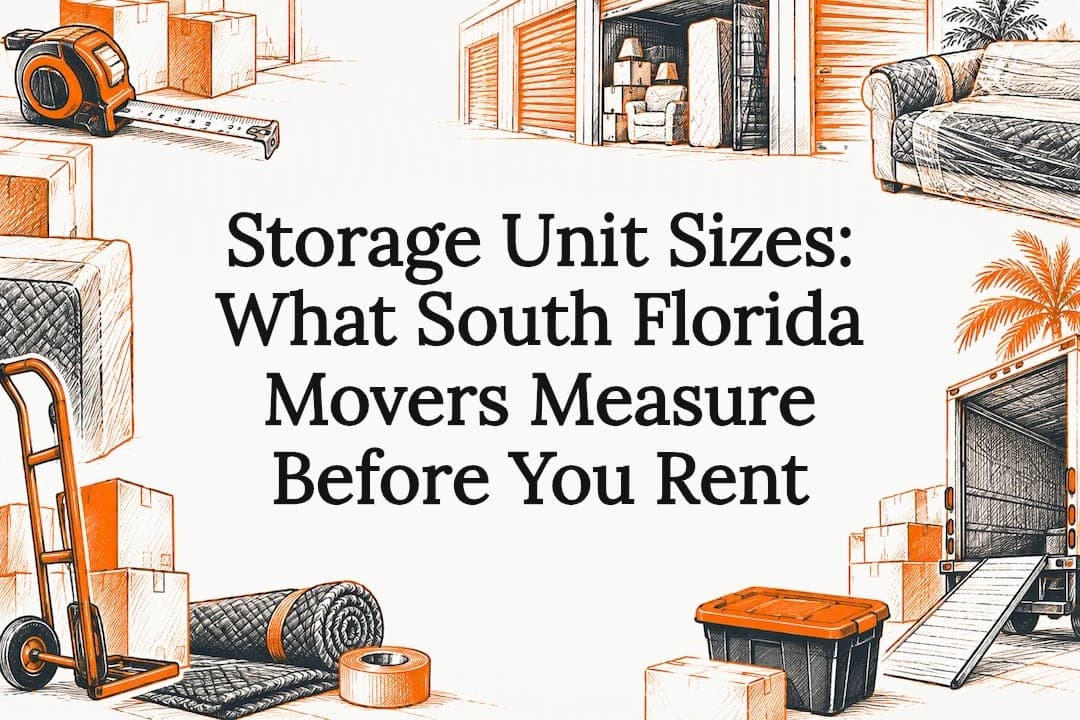
For closet overflow or small studio items, start your search with a 5x5 or 5x10 unit. If you're clearing out one or two bedrooms, look at 10x10 through 10x15. Larger homes, multi-room moves, or a vehicle call for 10x20 or bigger. Measure your largest furniture piece or your vehicle's full length first, then round up a size if you're unsure.
TL;DR:
- Standard capacity estimates are approximate because ceiling height, door width, and access type affect usable space; leave a center aisle if you need regular access.
- For enclosed vehicle storage, measure the full length, including attachments, check door width and height, and add 4 to 6 feet for maneuvering room.
- An 8 foot ceiling gives a 10x10 unit roughly 800 cubic feet; compare item volume with that capacity, not floor area alone.
- Climate controlled units cost more but can protect wood furniture and electronics from South Florida humidity, so consider one for belongings sensitive to moisture.
Table of Contents
- Standard storage unit sizes and what actually fits
- Storage unit size chart: square footage and common contents
- Choosing storage for cars, trucks, RVs, and boats
- Packing and layout strategies that maximize space
- How to choose the right unit size with confidence
- Mover-tested tips from the Orange Movers team
- Estimating cubic footage alongside floor area
- Measuring irregular and bulky items before you commit
- When professional help beats a self-managed unit
- Let Orange Movers handle the heavy lifting
- FAQ
- Sources
Standard storage unit sizes and what actually fits
Storage facilities build around a handful of standard footprints, and knowing what each one holds in real terms saves you from guessing. According to Public Storage's size guide, common units range from small lockers to 10x30 bays, each suited to a different stage of life or move.
A storage locker or 5x5 unit (25 square feet) works well for closet overflow: seasonal clothing, sports gear, a few file boxes, or around ten standard moving boxes stacked carefully. A 5x10 unit (50 square feet) suits a studio apartment or single bedroom's worth of overflow, including a mattress, a dresser, and roughly 20 boxes.
Step up to a 5x15 or 10x10 unit (75 to 100 square feet) when you're storing contents from a one-bedroom apartment: a sofa, bed frame, dining set, and the boxes that go with them. Larger footprints track with larger homes, and Public Storage outlines typical equivalents:
- 10x15 (150 sq ft): two-bedroom apartment, including major appliances and several dozen boxes.
- 10x20 (200 sq ft): three-bedroom home or a mid-size vehicle alongside household goods.
- 10x25 (250 sq ft): four-bedroom home with larger furniture and more boxes than a 10x20 can comfortably hold.
- 10x30 (300 sq ft): large homes with five or more rooms, often including big furniture, appliances, and seasonal equipment together.
Keep in mind that these figures are approximate. Ceiling height, door width, and whether a unit is drive-up or indoor all affect how much actually fits, and sizes vary somewhat by facility. If you plan to visit your unit regularly to grab items, leave room for a walkway down the middle rather than packing wall to wall. That single decision often pushes renters to the next size up, but it saves time and frustration every time you need something buried in the back.
Storage unit size chart: square footage and common contents
Unit sizes are easiest to compare side by side, since square footage alone doesn't always tell you what will fit once furniture shapes and stacking height enter the picture.
These numbers come from standard size references, and actual usable space depends on your facility's ceiling height and layout.
Choosing storage for cars, trucks, RVs, and boats
Vehicle storage is a different calculation than household goods. Instead of square footage, you need to measure overall length, including any hitch, tongue, ladder rack, or trailer attached, plus the height at the tallest point.
- Measure bumper to bumper, then add any attachments that extend the vehicle's footprint.
- Check door width and height on enclosed units, since these often limit what fits more than the floor space itself.
- Many standard cars fit comfortably in a 10x20 unit, while RVs and boats typically need stalls between 30 and 50 feet depending on class and towing equipment.
According to vehicle storage clearance guidance, enclosed storage decisions should be driven by length and clearance rather than floor area alone, and door dimensions deserve a second look before you commit.
Pro Tip: Add 4 to 6 feet beyond your vehicle's measured length for maneuvering room, and confirm the facility's drive aisles and turn radiuses can accommodate your vehicle before reserving.
Packing and layout strategies that maximize space
Getting the most out of a unit starts before you ever load a box. Walking through your inventory and mapping large items to a footprint first prevents the common mistake of running out of room halfway through move-in.
- List your furniture and large items, then measure the biggest pieces against your planned unit's dimensions.
- Place heavy items and furniture on the floor along the back and sides first.
- Use shelving units for medium boxes so you're not stacking directly on top of fragile items.
- Keep lightweight, less frequently needed boxes on the highest tier.
- Reserve a center aisle if you expect to access the unit often, or pack tightly and label every box if it's long-term storage.
Vertical stacking matters because many storage units have 8 to 10 foot ceilings, and using that height well often lets you choose a smaller, less expensive unit than floor space alone would suggest.
Pro Tip: Protect furniture with moving blankets, disassemble bed frames and tables where possible, and set mattresses or upholstered pieces on pallets to keep them off the floor.
How to choose the right unit size with confidence
Picking a size comes down to a short process rather than guesswork. Start with an honest inventory, compare it against standard dimensions, then factor in how you'll actually use the space.
- Build a list of furniture, boxes, and oddly shaped items, and measure your largest pieces.
- Match your inventory against a size chart, then round up if you're near the top of a unit's capacity or need a walkway.
- Ask the facility about drive-up versus indoor access, ceiling height, climate control, insurance requirements, gate hours, and any monthly minimums.
- Consider the next size up if you expect to add items over time, need frequent access, or are storing bulky furniture that doesn't stack well.
Climate-controlled units cost more, but they matter for wood furniture, electronics, and anything sensitive to South Florida humidity. We cover when that upgrade is worth it in our post on climate-controlled storage. A slightly larger unit with breathing room is often easier to live with than a tightly packed smaller one, especially if you'll be in and out of it more than once.
Mover-tested tips from the Orange Movers team
We load and protect belongings across Fort Lauderdale and South Florida, and that experience shapes how we think about sizing. We pack to preserve usable cubic footage, not just floor space, and take extra care protecting elevators and hallways during high-rise moves so furniture arrives undamaged. If you're weighing storage as part of a move, our storage and warehousing services and packing team can help you avoid renting more space than you need.
— Orange Movers Team
Estimating cubic footage alongside floor area
Square footage tells you half the story. A 10x10 unit with an 8-foot ceiling holds roughly 800 cubic feet, but that volume only becomes usable space when you stack efficiently rather than spreading everything across the floor. Partner guidance on calculating cubic feet for a moving estimate offers a practical method: measure each major item's length, width, and height, multiply to get cubic feet, then add those figures together for a rough total.

Compare that total against a unit's cubic capacity, not just its square footage, and you'll get a more honest read on whether your belongings fit. A sectional sofa and a stack of flattened boxes take up very different amounts of vertical space even if they sit on the same floor footprint. Facilities with taller ceilings, sometimes 10 feet instead of 8, offer meaningfully more cubic capacity in the same square-foot unit, which matters if you're choosing between two similarly priced options. When your cubic-foot total lands close to a unit's upper limit, size up rather than count on a flawless stacking job to make everything work.
Measuring irregular and bulky items before you commit
Odd-shaped items, like bicycles, patio furniture, exercise equipment, and framed art, don't fit neatly into standard box-count estimates. Measure these individually at their widest, tallest, and deepest points, since an item's packed dimensions are often larger than its resting shape suggests once you account for handlebars, legs, or frames.

For bulky furniture like sectional sofas or armoires, measure each component separately if it disassembles, since that often changes how it stacks against a wall. Doorframes and hallways at your current home matter too. If a piece barely cleared your front door, measure it again before assuming it will slide easily into a storage unit's entrance. Mattresses and box springs should be measured flat and accounted for as a single flat plane along one wall rather than stacked, since bending them to stack risks damage.
When in half a dozen irregular items make your inventory hard to judge, round generously. A unit that's slightly larger than your calculated need costs less in frustration than one where a single oversized item won't fit through the door.
When professional help beats a self-managed unit
Full-service storage or storage-in-transit makes more sense for high-rise moves, limited building access, or fragile collections where handling risk outweighs the savings of doing it yourself. Professional crews help select the right unit size and protect belongings during transport and placement.
Let Orange Movers handle the heavy lifting
Choosing the right size is only half the job. Getting everything there safely, packed well, and placed efficiently is the other half, and that's where professional moving teams earn their keep. We offer full-service packing, careful furniture protection, and storage and warehousing built for South Florida homes and businesses, so your belongings arrive ready to fit the space you've reserved rather than needing a rework once they're inside.
Professional handling reduces the dings, scratches, and wasted space that come from rushed loading, helping your inventory fit the unit planned rather than spilling into the next size up. If you're planning a move that includes storage, reach out to our storage and warehousing team for a straightforward quote and a single point of contact from pickup through placement.
FAQ
How do I know what size storage unit I need?
Start by listing your furniture, boxes, and large items, then compare that inventory against a standard size chart like the one above. If your estimate lands close to a unit's upper capacity, choose the next size up to allow for stacking and a walkway.
How many bedrooms can fit in a 10x10 storage unit?
A 10x10 unit, at 100 square feet, typically holds the contents of a one-bedroom apartment, including a bed, dresser, small furniture, and a few dozen boxes. Larger or multiple bedrooms generally require a 10x15 or bigger unit.
How much can a 20x20 storage unit hold?
A 20x20 unit isn't a standard self-storage size in most facilities, which typically top out around 10x30 (300 square feet) for household storage. For contents matching a large home, a 10x30 unit or a vehicle storage bay is the more common option to ask about.
Is a 10x20 storage unit big enough for a car?
A 10x20 unit commonly fits a standard car along with some household items, but you should measure your vehicle's full length, including any racks or attachments, before reserving. For enclosed vehicle storage, door width and height often matter more than floor space.
Sources
- Self-Storage Unit Size Guide (Public Storage)
- RV storage building sizes and clearance guidance (Steel Structures America)